Featured Articles...

May 1, 2012

Sinha to head Atomic Energy Commission…

image

Power India found that Director of Bhabha Atomic Research Centre (BARC) Ratan Kumar Sinha on Monday took charge as Chairman of Atomic Energy Commission (AEC) and Secretary in the Department of Atomic Energy from incumbent Srikumar Banerjee.


Sinha, a topper in mechanical engineering from Patna University who headed the reactor design group at BARC for several years, will guide the Indian nuclear sector in its next phase in which large indigenous as well as foreign reactors would be installed to rapidly ramp up India’s nuclear power generation capacity.


“My priority will be removing irrational fear about radiation from people’s mind as
nuclear energy will have a larger role in our growth,” Sinha told Deccan Herald over phone from Mumbai.


“In many of our rules, we do not factor well established scientific facts based on studies conducted at Hiroshima and Nagasaki. We have restrictive and conservative rules. I want to have a look at all these rules with new scientific findings,” he said.


Sinha, who would be at the helm of affairs in the nuclear sector for the next three and half years said development of large commercial light water reactor and providing drinking water solution in villages using nuclear technology would be his other priority areas.


Asked about operationalisation of Kudankulam nuclear power plant, the new AEC chief said that the first unit might be operational within the next two months as work was progressing at a fast pace. But it will ultimately depend on the speed of regulatory approval from Atomic Energy Regulatory Board.


Sinha joined BARC in 1973 and over the years was actively involved in designing new reactors. He guided research programmes for new advanced reactors for thorium utilisation and the futuristic Indian high temperature reactor intended for hydrogen generation.


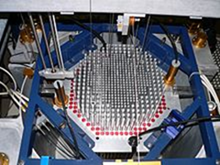
As a part of his research work on reactor design, he led the project to design the compact high temperature reactor, which serves as a technology demonstrator for future high temperature reactors.


While Banerjee is likely to return to Kolkata after 45 years in the nuclear sector, the government may nominate Anil Kakodkar – Banerjee’s predecessor – in the Rajya Sabha. The official announcement, however, has not been made.

This work is licensed under a Creative Commons license.
Read More...

Haryana to face power shortage of 1200 MW during the summer…

image

Power India  found that Haryana is expected to face longer power cuts this summer as three thermal units of 1200 Mega Watt (MW) capacity are under forced outage for the next two months.

Two units of 300 MW each at Yamuna Nagar thermal are under major breakdown after vibrations were noticed in the turbines .The Chinese Shanghai make. units were installed by Reliance Infra under EPC contract from Haryana Power Generation Corporation Ltd (HPGCL) in 2008.

The turbine rotor of unit no. 2 was bent on 25th September last year after water entered the turbine .The rotor has been sent to Baroda for straightening the rotor and the cost involved touching Rs 5 crore. The unit no. 1 has also faced turbine vibration and is on forced outage since March 31.The turbine blades were found broken.

Now 600 MW unit no. 1 of Khedar (Hissar) thermal plant has been closed on 28th April after vibration in turbine. The thermal authorities have sought a 40 days’ work permit to set right the defect. The new units of Chinese make are developing faults in the turbine at Khedar as well as Yamunanagar while the much older units of BHEL at Panipat are performing well.

All the three units under breakdown are not likely to be revived before end June and will force authorities to impose long power cuts in coming summer months. The state will be facing minimum shortage of 288 lakh units daily on account of forced outage of three units.

All India Power Engineers Federation in a letter to Power Ministry has claimed that there is widespread perception amongst engineers is that in order to win the EPC bids for Yamunanagar and Khedar projects Reliance quoted lowest rates for the worst quality of Chinese equipment which is now getting exposed. The repeated breakdown of newly constructed Chinese units in Haryana is raising question marks on quality.

To make things worse the newly constructed units of China Light and Power at Jhajjar with capacity 660 MW each are not running due to inadequate coal allocation. Coal India has reportedly refused to sign coal agreements with units commissioned after December31.

In addition to forced outages the normal boiler leakages will make the power position worse.

This work is licensed under a Creative Commons license.
Read More...

Around 89 projects are pending for Environment & Forest Clearance…

image

Power India found that as informed by the Lok Sabha today around 89 power projects are pending with MoEF for Environment & Forest Clearance.


While 41 power projects are awaiting environment clearance, 48 power projects require diversion of forest land, the Environment Minister, Ms Jayanthi Natarajan, said during Question Hour.


She said a total of 165 power projects were granted environment clearance and 143 power projects given forest clearance during the last three years.


Two projects were rejected for environment clearance and three power projects did not get forest clearance during the last three years.


The main reasons for pendency were delay in submission of environmental impact assessment report and environmental management plan including public hearing report and non-submission of complete information by the project proponents, Ms Natarajan said.


-----------------------------

Power India – A popular blog on Indian Power Sector

This work is licensed under a Creative Commons license.
Read More...

Coal Ministry issued show-cause notices to 10 power companies for delay in coal block development…

image

Power India found that Coal Ministry issued show-cause notices to 10 firms, including Reliance Power's Sasan, Tata Power, Hindalco and Grasim Industries asking reasons for delay in developing coal blocks and warned that the same may be cancelled if explanation is not given in 20 days.


As stated under the notice to Reliance Power’s Sasan Project by  Coal Ministry:

"You are called upon to show cause...as to why the delay in the development of the coal block(s) should not be held as violation of the terms and conditions of the allotment ... failing which...action as appropriate would be taken against your company(ies) for de-allocation...,"

Similar notices have been issued to other companies as well.


These firms were allocated blocks between 1999 and 2008 for development of captive mines for power generation. The projects for which the coal blocks were given, included 4,000 MW Sasan ultra mega plant in Madhya Pradesh. “

The show cause notices have also been sent to public sector Jharkhand State Mineral Development Corporation and Chhattisgarh Mineral Development Corporation. Besides MP, the blocks are located in Jharkhand and Chhattisgarh.

Notices would be sent to about 58 coal block holders, sources said. Of 218 blocks allocated 25 have been taken back by the government.

While the coal-mining for commercial sale is a monopoly of the PSU Coal India, firms in power, steel and cement were given the coal blocks for captive use on the first-come-first-serve (FCFS) basis.

But most of them could not develop the blocks for various reasons ranging from problems in environment clearances and difficulties in land acquisition.

Meanwhile, the FCFS policy has come in for a severe criticism by the Comptroller and Auditor General (CAG), which has reportedly estimated 'windfall gains' to private and public sector companies at Rs 10.67 lakh crore


--------------------------------------------

Power India – A popular blog on Indian Power Sector

This work is licensed under a Creative Commons license.
Read More...

33 thermal plants is having coals stocks which may last for only 7 days…

image

Power India found that according to the data published on Central Electricity Authority, at least 33 power plants of the total 89 have coal stocks which may be barely enough to generated power for 7 days.


Further out these 33 thermal plants some 18 power plants will have coal stocks enough for only 4 days.


Although Coal India, the monopoly supplier of coal, is located in Eastern India, this region has the highest number of stations with super critical stock position.


Eastern India 9 stations with super critical stock position as of April 26, the latest data available with Central Electricity Authority.


Super critical stock position refers to coal stocks enough to generate power for four days and critical stock position refers to stock position


The highest number of critical stock position was from North India at 14 stations. This region had only 7 stations with super critical stock position.


According to CEA, most of the plants that have super critical or critical stock positions are because of less receipt of coal from Coal India. These includes plants like Badarpur Thermal Power Stations (TPS), Unchahar TPS, Ukai TPS, Bhusawal TPS and Talcher TPS. About 17 power stations are suffering from near depleted stock due to less imports.


----------------------------------

Power India – A popular blog on Indian Power Sector

This work is licensed under a Creative Commons license.
Read More...

MP Solar Tender – 430 MW bids against tender of 200 MW…

image


Power India found that MP received bids for 430 MW Solar PV Plant against 200 MW Tender.


Developer wise break up is as follows:

SN

Developer

No of Projects

Total Capacity Bidded (MW)

1

Acme Telepower

3

75.0

2

GMR

1

45.0

3

Azure

1

5.0

4

BGR

1

10

5

Simplex Infrastructure

1

10

6

Sai Sudheer

2

50

7

Arjun Green Power

1

5

8

Sapec Enviro

1

5

9

Alpha Infra Prop

1

20

10

Essel Infra Properties

1

30

11

IL&FS

1

50

12

Welspun

2

200

13

Solar MP Pvt Ltd

1

25

Total Capacity Bidded


430


----------------------------------------

Power India – A popular blog on Indian Power Sector

This work is licensed under a Creative Commons license.
Read More...

Power Ministry issued directives to CERC to grant open access…

image

Power India found that the Power Ministry has issued directives to the Central Electricity Regulatory Commission (CERC) on open access, yet another push for granting open access to all electricity consumers with power requirement of 1 MW and above.


The ministry has taken the decision after observing that the regulators had not taken seriously its letter of November 30,2011, in this regard, and instead have either determined the energy charges or are in the process of determining the charges.


This comes at a time when there has been a growing resistance from distribution companies to the open access system, as they fear they might lose consumers who cross-subsidise the agriculture and low-income power consumers.

Mr. Parmod Deo, Chariman, CERC said

“CERC has already complied with the provisions of the Electricity Act, 2003. It has put in place regulations whereby any consumer is free to purchase power from any source – which may be for short term, medium term or long term”


CERC had powers to regulate inter-state connectivity while under section 42 of the Electricity Act, 2003, the state electricity regulatory commissions(SERCs) had powers over open access. Therefore, state governments could issue policy directives to SERCs to implement the law ministry’s interpretation on open access.


Currently, of the 1,86,000 MW power the country produces, 38% was consumed by industries, and after adding consumers like the Railways and defence, the figure was around 45%, said the power ministry. So, such consumers should be allowed source power according to their choice.


About 40,000 MW of power were in private hands, and the number of private players had not entered into any power sale agreement.


---------------------------------------------

Power India – A popular blog on Indian Power Sector

This work is licensed under a Creative Commons license.
Read More...

33 km long coal transportation corridor of Mahanadi Coalfields in West Bengal is not progressing as per the schedule…

image

Power India found that Mahanadi Coalfield Ltd’s (MCL) proposal of coal corridor between Basundhara to Bhedabahal is not progressing as per the scheduled timelines.


The proposed project of coal transportation corridors  will be constructed between Basundhara to Bhedabahal and will be having around 33 km four lane stretch exclusively for transportation of coal from mines and will be connected with the State Highway 10. The proposed investment of Rs. 385 Crs has been approved by the company board.


The proposal for the corridor came after accidents and dust pollution made life miserable for hundreds of villagers. About 5,000 heavy coal-laden vehicles that ply through Ujjalpur, Tangarpali, Chhatenpali, Duduka, Balinga, Bandhapali and Mahulpali during peak hours kick off clouds of dust leading to health problems and polluting water sources in the villages.


The villagers, who had pinned hopes on the corridor would have to wait for a long time. The proposal has not moved beyond the drawing board stage as neither the Sundargarh district administration nor MCL authorities are in a position to predict its time of completion.


Sources said that the Public Works Department (PWD), Sundargarh, has been entrusted with execution of the project and MCL would bear the entire cost. Sambalpur-based MCL spokesperson Dikken Mehera claimed that MCL had sanctioned Rs 385 crore for the project and it’s up to the district administration to do the rest.


Sundargarh Collector Rupa Roshan Sahu said the PWD had submitted estimates to MCL for land acquisition and project costs but a communication from MCL is awaited.


Administrative sources said after final approval from MCL, the land acquisition task would be taken up. It would be a couple of years before the harassed villagers could hope to get some relief.


The proposed project of coal transportation through these corridors will be easy and was expected to reduce dust pollution.


MCL has two high-yielding functional coalmines - Basundhara and Kulda - in Hemgir block of Sundargarh district, about 145 km from Rourkela.


In view of the projected dispatch of coal by MCL, the company had planned to construct four coal corridors in its coal producing areas comprising Talcher, Ib valley and Basundhara mines.


---------------------------------------------------------

Power India – A popular blog on Indian Power Sector

This work is licensed under a Creative Commons license.
Read More...

According to secretary, DAE, India can build cheaper nuclear reactors…

image

Power India found that according to Dr Srikumar Banerjee, secretary in the DAE, India can build cheaper nuclear reactors than even South Korea.


Dr Srikumar Banerjee, secretary in the Department of Atomic Energy (DAE), said India can now manufacture nuclear reactors at $1,700 per unit.

As said by Dr Banerjee

"We are now the world's most economical manufacturer of nuclear reactors. Our cost per unit, of $1,700 (for a 700mw reactor) is substantially less than our nearest competitors. The average international cost is now between $2,500 and $3,000 (for a 1,000mw reactor). South Korea demonstrated its ability to build nuclear reactors for less when it wrested a massive reactor deal for the UAE from French giant, Areva, a couple of years ago.

 
With the protests in Kudankulam piping down, Banerjee said DAE was waiting for a couple of clearances from the Atomic Energy Regulatory Board (AERB) to start Kudankulam-1.  The AERB will have to conduct a robotic inspection of the pressure vessel in the Kudankulam plant. This is done after what they call the "hot run", which is a kind of a rehearsal but without nuclear fuel. "After this, they open the cap of the pressure vessel to do a robotic inspection. Only after clearing this inspection are we allowed to put in nuclear fuel."


The DAE chief said he was looking at Kudankulam going "critical" by mid-June. "The approach to criticality should happen around that time," he said. "That will be exciting." Six months down the line, Banerjee said the DAE hopes to commission the second Kudankulam plant as well.


Indian companies manufacturing components and systems for nuclear reactors, Banerjee said, can now do the same work for much less cost. For instance, he said, L&T, which supplies many critical components for the Indian nuclear and defence sectors, can make the large reactor vessel in their new Hazira plant. This is something of an achievement because it's traditionally been the preserve of Japanese engineering expertise.

Banerjee was clear that the despite Fukushima, countries like India will have a high demand for nuclear energy. "In the months after Fukushima, we have received expressions of interest from Haryana, Rajasthan and Madhya Pradesh to set up nuclear power plants. We will do all of them," asserted a confident DAE chief.


-----------------------------------

Power India – A popular blog on Indian Power Sector

This work is licensed under a Creative Commons license.
Read More...

Rajkot Municipality to set up a 50 kW solar grid connect system…

image

Power India found that in a significant move towards developing Rajkot as a ‘solar city,’ the  Rajkot Municipal Corporation (RMC) has set up a 50-kilowatt-peak (kW) solar grid connect system.


Finance minister  Vajubhai Vala will inaugurate the newly set up  solar power system at RMC’s east zone office on Monday evening.


“Once the 10-kW solar power grid connecting the system becomes operational,  RMC will be able to save 40 to 45 units daily. As of now, RMC’s east zone office consumes around 150 to 200 units daily,” said an RMC official.


According to senior RMC officials, the central government in 2010, selected Rajkot to be developed as a ‘solar city.’


RMC officials said earlier that the civic body has set up a 10-kW solar power grid connecting system at its west zone office. “We will soon add 60-kW solar power grid connecting system with the existing 10-kW plant. We plan to reduce electricity bills of all RMC offices in phased manner by harvesting  solar energy as alternate source of power,” said B H Rupani,  town-planning officer, RMC.


Officials said, Union ministry of new and renewable energy has sanctioned Rs 46 lakh as subsidy to RMC to carry out various solar power projects in the city for promoting ecologically sustainable growth, while addressing India’s energy security challenge.


“RMC has carried out various programmes for promotion of solar energy and making people aware about the use of this clean, alternate source of energy. As part of the solar city project, we expect to generate at least 10% of city’s energy consumption via solar power,” an official said.


Once the total 120-kW solar power grid connect systems are operational at RMC’s both zonal offices, the civic body will be able to save at least Rs 10 lakh annually.

This work is licensed under a Creative Commons license.
Read More...