Featured Articles...

December 2, 2013

Temples gear up to tap solar power in Tamil Nadu...


Temples gear up to tap solar power in Tamil Nadu...

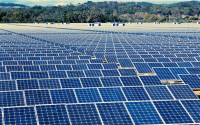
A good number of ancient temples across Tamil Nadu will use gr­een power for illumination to bring down power bills and harness this benign power in consonance with the state government's solar energy policy.
 
The process of installing 10 kw and 20 kw plants, as per the requirement of the temples, has commenced and the plants will be commissioned by the end of this year. According to sources, the state Hindu religious and charitable endowments (HR&CE) department is in the process of installing solar power plants in 13 temples besides the office of the HR&CE commissioner here.
 
Among the temples, a 10 kw SPV power plant without battery is proposed for Sri Dha­ndayuthapani Swamy temple, Angala­mman temple, Sri Bhav­aniamman temple, Sri Balamurugan temple, Sri Bhagavathy Amma, Kanyakumari, Sri Renugambal Amman te­mple and Sri Ranganatha Swamy temple, and a 20 kw plant will come up at Devi Karumariamman temple, Thiruverkadu, HR&CE office, Sri Arunachaleswarar temple and Sri Subramanya Swamy temple.
 
Besides, solar panels with 2-5 kw will be established at Sri Parth­asa­rathy temple, Vada­palani Murugan temple and Sri Kapaleeswarar temple.
 
Sources said the Tamil Nadu energy development agency (TEDA) has invited tenders for installing solar power plants at the temples and they will be grid interactive and able to provide about 30 per cent of the power requirement for the shrines. Since these projects do not entail the deployment of more manpower, temple staff will be trained to handle them.
 
Though some temples have taken up similar projects on their own, this is the first time that the HR&CE department has taken the initiative to harness solar power. "Depending upon the success, it will be extended to other temples," an official said.

Source

Read More...

BSNL to open bids for solar-powered 2G mobile towers...


BSNL to open bids for solar-powered 2G mobile towers...

State-owned telecom firm BSNL is likely to open within 10-12 days the financial bids for the tender to set up mobile towers in some states.


BSNL had floated the tender in August for supply, installation, testing, operation and maintenance for five years of 1,315 sites of 2G GSM network in left wing extremist (LWE) areas of Bihar, Jharkhand, Orissa and West Bengal.

"The financial bids are likely to be opened within 10-12 days as by then the technical evaluation of the equipment will be over," said a source.

Two companies left in the fray, Vihaan Networks Ltd (VNL) and HFCL are showcasing their solutions onsite, sources said, adding that only after evaluating the technical solution, will the financial bids will be opened. The towers, among other things, have to be equipped to use solar power.

"We are testing the solutions given by them and after that the financial bids will be opened and work will be distributed among two vendors," he said.

He said that as per the norms, state-owned ITI will be given 30 percent of the work while the rest will be distributed to two players.

"Since only two players are showcasing the technical solution, it is a foregone conclusion that these two firms will be awarded the tender unless they fail in the technical process," the source said.

As per the source, 11 players participated in the pre-bid conference and three finally applied for the tender. Of the three, bids submitted by VNL and HFCL were found to be correct.

The Cabinet in June had cleared the 3-year old proposal to set up mobile towers at 2,199 locations at cost of around Rs. 3,046 crore in nine states.

BSNL was mandated to set up the towers, the cost of which will be borne by the Universal Service Obligation Fund (USOF). The towers which have been a long-pending demand of the Home Ministry, will strengthen the telecom network resulting in increased penetration in LWE affected areas and other areas facing security challenges.

Ministry of Home Affairs had asked the Department of Telecom to get project completed by BSNL within a year, saying that in the first phase the towers should be installed in the proximity of security force establishments.

BSNL had already installed towers at some locations.

Source

Read More...

Non-conventional energy finds no favor with discoms in Madhya Pradesh...


image

Reeling under financial burden, the power distribution companies (discoms) in Madhya Pradesh are not keen on buying power generated through non-conventional means in view of the high power tariff.

None of the three discoms in the state are keen on entering into power purchase agreement (PPA) with alternate energy producers.

This, despite the emphasis on promoting alternate energy sources by the state and union governments.

The only notable PPA entered by state's power management company was with Welspun Renewable to buy 151 MW solar power generated by it.

The discoms are incurring heavy losses and think that buying power from the alternate energy producers is a costly affair. On the other, the alternate energy producers believe that it will not affect them at all as they can pass it on to their consumers and its impact will be minimal even on consumers. The discoms believe that buying power from conventional sources of energy cost them merely Rs 3 per unit, whereas the cost is as high as Rs 9.30-13 and Rs 8 in case of REC. Still, the MP electricity regulatory commission has made it mandatory for discoms in the state to meet a minimum of 0.60% of their power requirement through alternate sources of energy, which include solar energy.

Talking to TOI, joint managing director of Indore-based solar energy firm, Ujaas, Anurag Mundra, said, "The national tariff policy 2006 mandates the state electricity regulatory commissions (SERC) to fix a minimum percentage of energy purchased from renewable sources of energy. This obligation of purchase of solar power can be met by either direct purchase of solar power, commonly known as preferential power purchase agreement (PPPA)/ special feed in tariff (FIT) or by the purchase of solar renewable exchange certificate (REC) from the power exchange". Alpha is another solar energy firm in the state which also works on REC model.

The cost of fulfilling the renewable power obligation (RPO) will be included in the tariff charged by the utility companies. As per the estimates and data available the cost of fulfilling state renewable power obligation (SRPO) is around 4-6 paisa per power unit. Hence fulfilling the RPO doesn't lay any additional burden on the utilities, argue the renewable energy producers.

MD of Welspun Renewable, Vineet Mittal, said, "Among the five firms that had been assigned to supply solar power to the state, only we have completed the financial closure. We hope to start supplying renewable energy to the MP Power Management Co at the rate of Rs 8.05 per unit within a month."

When contacted, OSD, state's energy department, Ashok Shukla, said, "We have already bought renewable energy amount8ing to 300 MW. But, we do it on a competitive bidding basis only".

Source

Read More...

Achieving 20K MW solar power capacity by 2022 won't be easy...


Achieving 20K MW solar power capacity by 2022 won't be easy...

Poor financial health of power distribution companies and funding issues pose challenges to India's plan of having 20,000 MW solar energy capacity by 2022, according to a senior government official.

The ambitious Jawaharlal Nehru National Solar Mission, launched in 2010, has set a target 20,000 MW installed solar power capacity by 2022.

"We believe the 20,000 MW target is achievable. But it will not be easy as there are several challenges like inadequate transmission network, financial ability of discoms, among others," Ministry of New and Renewable Energy (MNRE) Joint Secretary Tarun Kapoor told PTI over the phone here.

The poor financial position of state electricity boards is a matter of concern for project developers even though the government has introduced debt restructuring package for distressed power distribution companies (discoms).

According to Kapoor, the lack of transmission network to evacuate solar power is a major hurdle.

"Setting up a transmission network is not an easy task. There are several challenges associated with it. There are concerns over funding in setting up solar plants, as banks are a little reluctant to fund such projects," he said.

Nevertheless, the government is making efforts to develop the solar energy segment.

Plans are on the anvil for setting up ultra mega solar projects (UMPPs), having capacity of about 4,000 MW, in different parts of the country.

The MNRE has proposed solar UMPPs in Rajasthan and Gujarat, besides plans for large solar parks in Ladakh and Kargil.

Ground work has already commenced for the country's first solar UMPP in Rajasthan. It would be developed by a joint venture -- Bhel (26%), Solar Energy Corp (23%), Power Grid Corp, Satluj Jal Vidyut Nigam and Hindustan Salts (16% each) and Rajasthan Electronics and Instruments (REIL) (3%).

"The joint venture (agreement) will be signed in December. The joint venture firm will then float the tenders," Kapoor said.

In this project, the first phase of 1,000 MW is expected to be completed in three years.

Going by estimates, the operational solar power capacity, comprising solar photo voltaic and solar thermal, is currently at little over 2,000 MW.

India has an overall installed power generation capacity of more than 2,27,000 MW, with renewable sources accounting for over 28,000 MW.

Source

Read More...

Government asks Coal India to meet production target for FY14: report...


Government asks Coal India to meet production target for FY14: report...

Coal Minister Sriprakash Jaiswal has asked state-owned Coal India Ltd (CIL) to ensure that it meets production target for the current fiscal year (FY14), according to a a ministry official.

"The Coal Minister has asked CIL to make sure that it meets its production and offtake targets for the current fiscal," the official from the Coal Ministry said.

The ministry has set production target of 482 million tonne (MT) and offtake of 492 MT for CIL for 2013-14.

The message was communicated to the company during the target review meeting held on November 27 in Kolkata, the official said.

The meeting chaired by Mr Jaiswal was attended by Coal India chairman and managing director S Narsing Rao and other officials of the PSU and its subsidiaries, the official added.

CIL produced 35.03 MT coal in October, missing its target of 40.82 MT. It also missed the offtake target of 41.55 MT for the month. It registered actual offtake of 35.51 MT.

According to a CIL official, the PSU suffered production loss in October due to Cyclone Phailin, which affected the key coal producing states of Odisha, Jharkhand and West Bengal.

Mr Jaiswal had earlier said that though production at CIL has been hit in October due to Cyclone Phailin, the coal major was "hopeful that it will achieve its production target for the current fiscal".

CIL, which accounts for over 80 per cent of the domestic production, contributed 452.5 MT of coal in the previous financial year compared with the target of 464 MT.

Source

Read More...

Tata Power plans to raise up to Rs 5,000 crore in next 3 years...


Tata Power plans to raise up to Rs 5,000 crore in next 3 years...

The country's largest private power producer Tata Power is exploring various options to raise around Rs 5,000 crore in the next three years.

Tata Power, which has an installed generation capacity of over 8,500 MW, has also embarked on ambitious expansion plans, including setting up projects in Vietnam and Georgia.

For raising funds, the power utility has said that it is studying all possible options.

"Everything is being studied, what is likely and what is not likely, something which we have not reached the decision as yet," Tata Power told analysts in November.

According to the transcript of analysts' call, the company's fund requirement is about Rs 4,000-5,000 crore over a three-year span.

The company's comment came in response to a query about the quantum of funds the company was looking at through various measures.

The fund raising options include possible sale of equity. Without providing specific details, Tata Power told analysts that it would look at all funds, "including debt funds but today we are quite stretched as far as date is concerned".

At the end of September this year, the company's long term borrowings stood at Rs 32,842.24 crore.

"We have funds as of today probably till the first quarter of next year provided all our consumers pay us on time," the company said.

For the six months ended September, the company posted a net loss of Rs 39.73 crore. In the year-ago period, it had a net profit of Rs 62.13 crore.

These figures are after considering tax, minority interest and share of profit of associates.

Tata Power generated 22,738 million units of electricity in the six months ended September, much higher than 14,029 million units produced in the year-ago period.

Source

Read More...

Large Power Generating companies breathe easy as government plans loan recast...


Large Power Generating companies breathe easy as government plans loan recast...

A big relief is on the cards for power companies such as Tata Power, Adani Power, Reliance Power and Essar Power whose plants are in trouble, and their lenders who are worried about loans worth Rs 2 lakh crore to the sector. The government is working out a plan to restructure the loans, extend repayment deadlines by three years and waive penalties, officials said.

The private sector, which has invested heavily in recent years and accelerated capacity addition, is struggling with fuel scarcity and distribution bottlenecks. Large capacities of plants based on coal or gas are stranded because of fuel scarcity while many are facing delays in clearances.

The proposal aims to help plants with 65,000-70000 mw capacity that have suffered in the last four years due to reasons like shortage of fuel, lack of regulatory clearances and rupee depreciation. The rejig was necessary to prevent the loans from becoming non performing assets (NPAs) till the plants generate regular cash flow, officials said.


Power minister Jyotiraditya Scindia is likely to meet finance minister P Chidambaram next week to discuss the proposal. "Private power generating companies have come under severe stress over the past four years due to conditions outside their control. Domestic coal and gas shortage, price volatility in imported coal, weak distribution utilities, problems in land acquisition and regulatory clearances, higher interest burden and forex exposure have adversely affected thermal plants. There is a need to restructure loans of these companies to prevent the plants from becoming NPAs," the official said.


The proposal includes shifting commissioning deadlines of projects, particularly gas-based plants, whose debt has already been restructured. Power secretary PK Sinha confirmed the development. "We are working one such proposal along with banks, the finance ministry and other ministries," he told ET.

Thermal plants in the country have been operating at record low level at about 63%. Gas-based power plants are running at less than 25% capacity and around 8,000 mw is idling for want of gas allocation.

Sinha, however, said the country's power deficit has come down to record 3.5% in October as against 8.9% in the same month previous year. He said this was because of improved hydropower generation, less demand due to favourable weather conditions, high capacity addition and policy initiatives taken by the government.

Over the past few months, the government has taken many decisions in favour of power companies like directing Coal India to supply coal to power firms for 20 year, and passing cost of imported coal to consumers, approving compensatory tariff to Tata Power and Adani Power and bailing out state distribution companies.

The measures are expected to benefit power companies in the next 18-20 months.

Source

Read More...

Power Ministry for safeguards in captive coal banking...


PowerMin for safeguards in captive coal banking...

The power ministry has told the Planning Commission that the proposed system of coal banking should not lead to profiteering among the coal block holders. The ministry has also called for the setting up of an empowered committee to decide on the transfer prices of surplus coal from one project to another.

The Commission is actively exploring the possibility of introducing the system of coal banking. A proposal to this effect was presented to the Plan panel by the Association of Power Producers (APP), a representative body of private power developers.

The APP proposal recommends that Coal India should act as a banker to store the surplus produce from at least 25 captive mines and return the fuel to the block holders once their projects go on stream.

Coal India, however, has refused to be a party to the proposed mechanism saying it cannot give assurances on returning the fuel given the growing demand for it.

After Coal India's refusal, the Commission has decided to allow cashless transfer of coal from one project to another for a maximum period of three years, and its equivalent return subsequently.

But the power ministry has cautioned that the block holder supplying coal should not unduly financially benefit from the banking process.

"There needs to be a balance between the need to appropriately incentivise surplus coal and the need to prevent undue enrichment. The transfer price of surplus coal should be decided by an empowered committee of the coal ministry," the power ministry wrote in a letter to the Commission on November 18.

The BK Chaturvedi committee on coal banking has finalised its report and would likely submit it next week.

The power ministry argued that the captive block owners cannot be allowed to operate under this dispensation for a long period as it would defeat the basic objective of allocating a block for an end-use project.

Source

Read More...

Valecha Engineering Limited bags Project in Himachal Pradesh in the Hydro Power Tunnelling Segment...


Valecha Engineering Limited bags Project in Himachal Pradesh in the Hydro Power Tunnelling Segment

Valecha Engineering Limited has recently bagged a project from NHPC Ltd worth Rs. 176.29 crores for construction of balance civil works of head race tunnel by DBM, Associated Works and HM Works (Lot PB2B) of Parbati HE Project Stage II in Himachal Pradesh.

With this project, the tunnelling segment constitutes 10% of the order book of the company.


Shares of Valecha Engineering Limited was last trading in BSE at Rs.34.45, down by Rs.1.25 or 3.50%. The stock hit an intraday high of Rs.36.50 and low of Rs.34.10.


The total traded quantity was 0.11 lakhs as compared to 2 week average of 0.33 lakhs.

Source

Read More...

December 1, 2013

BHEL commissions first super critical thermal unit...


BHEL commissions first super critical thermal unit...

State-owned Bharat Heavy Electricals Ltd has commissioned its first 660-MW super critical thermal unit at a NTPC power plant in Bihar.

The power equipment major on Sunday said its 660 MW Boiler Turbine Generator (BTG) unit, having super critical parameters, attained full load at the Barh thermal project.

This package for Stage II Unit 4 of the project being implemented by NTPC.

“The supercritical steam parameters for this project — efficiency and heat rate are better than those of comparable supercritical projects presently under installation by others,” BHEL said in a statement.

The maiden order for 660 MW sets were won from NTPC through international competitive bidding for this 1,320 MW project. The scope of work included design, engineering, manufacture, supply and erection along with auxiliaries.

At present, BHEL is executing orders for supply and installation of 27 steam generators and 24 turbines with supercritical parameters of 660 MW, 700 MW and 800 MW ratings.

Other supercritical sets under execution include 2x660 MW Mouda Stage-II & 2x800 MW Gadarwara of NTPC; 3x660 MW Nabinagar of NPGCL (Joint Venture of NTPC and Bihar State Electricity Board); 3x660 MW Bara TPP of the Jaypee Group; 2x800 MW Yeramarus of Raichur Power Corporation Ltd; 3x660 MW Lalitpur of the Bajaj Hindustan Group; 2x800 MW Krishnapatnam of APGenco and and 2x660 MW Raghunathpur of DVC.

The power gear maker has the capability to manufacture thermal sets having 1,000 MW rating, using domestic and imported coal.

Source

Read More...